
Anhydrous Aluminium Chloride
Anhydrous Aluminium Chloride
Inorganic Chemical Compound
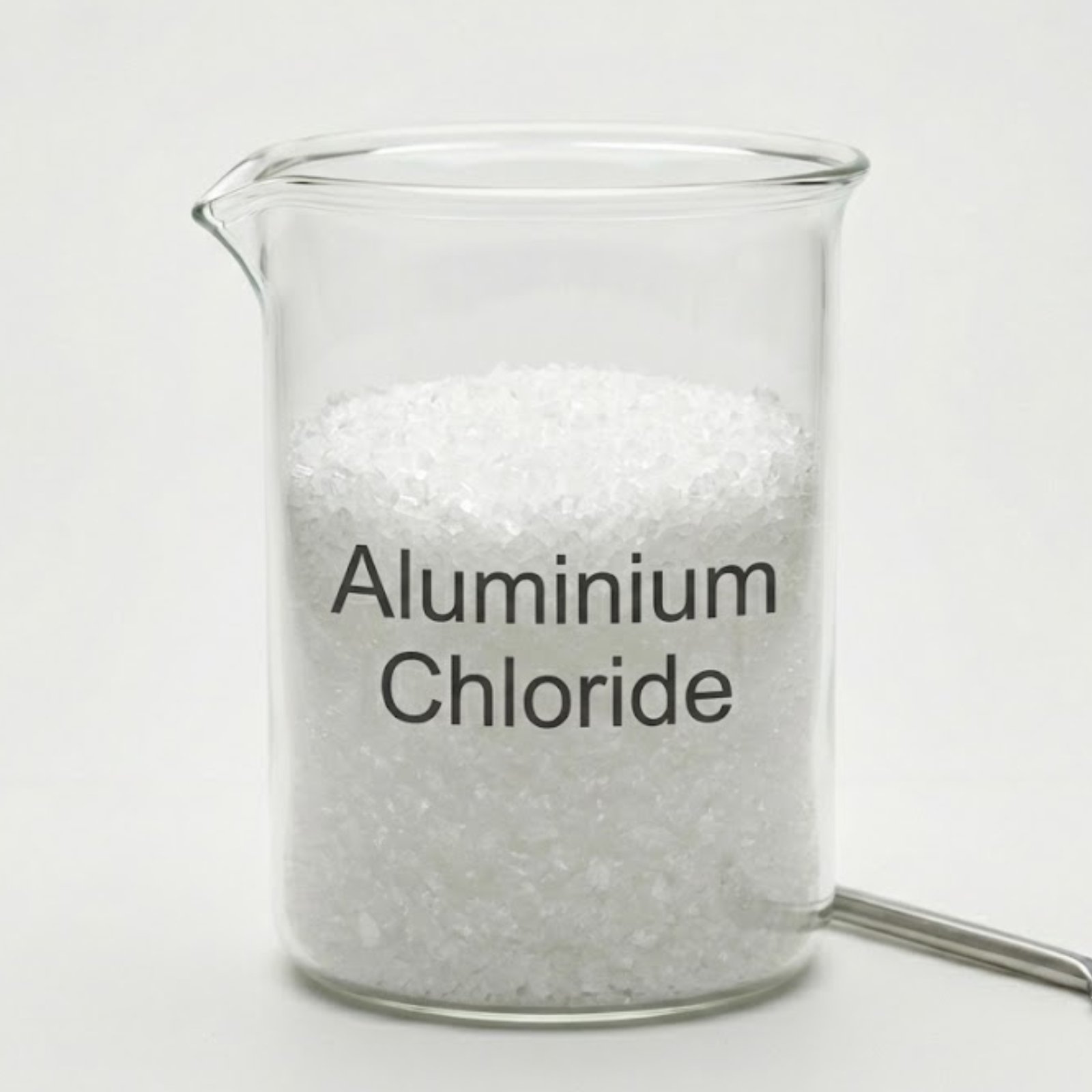
Aluminium chloride is an inorganic chemical compound with the formula AlCl₃. It appears as a white to pale yellow crystalline solid with a strong affinity for moisture. The compound is highly hygroscopic and fumes in moist air due to hydrolysis.
Aluminium chloride is primarily produced by the reaction of aluminum metal with chlorine gas or hydrogen chloride. It is widely used as a catalyst in chemical reactions, especially in petrochemical, pharmaceutical, and dye manufacturing industries.
Physical & Chemical Properties
AlCl₃
≥ 99%
White to pale yellow
-
Anhydrous Aluminium Chloride
Product Specifications| Specifications | Range |
|---|---|
| Purity (AlCl₃) | 99.0% min. |
| Iron (Fe) | 50 ppm max. |
| Free Aluminium | 0.5% max. |
| Heavy Metals (as Pb) | 10 ppm max. |
| Water Insoluble Matter | 0.3% max. |
| Appearance | Yellowish to pale solid flakes / granules |
| Solubility | Reacts violently with water |
| CAS No. | 7446-70-0 |
| UN No. | 1726 |
Anhydrous Aluminium Chloride
Anhydrous Aluminium Chloride Applications
Aluminium chloride is widely used as a Lewis acid catalyst in chemical reactions, particularly in Friedel–Crafts alkylation and acylation processes. It plays a vital role in the manufacture of dyes, pigments, detergents, polymers, and other organic compounds.
Aluminium chloride is used as a coagulant in water and wastewater treatment processes. It helps remove suspended solids, organic matter, and impurities, improving water clarity and treatment efficiency.
In the pharmaceutical sector, aluminium chloride is used as a reagent and intermediate in the synthesis of various active pharmaceutical ingredients (APIs) and medicinal compounds, supporting controlled and efficient reaction processes.
In cosmetics and personal care products, aluminium chloride is widely used as an active ingredient in antiperspirants. It works by temporarily blocking sweat ducts, helping to control excessive perspiration.
Aluminium chloride is commonly used in laboratory research as a catalyst and analytical reagent. It is employed in organic synthesis, chemical analysis, and experimental reaction studies requiring strong acidic catalytic properties.
Aluminium chloride is applied as a catalyst in rubber and polymer manufacturing processes. It assists in polymer modification and improves material performance for industrial and commercial use.
In petrochemical applications, aluminium chloride is used as a catalyst in hydrocarbon processing and refining operations, including isomerization and polymerization reactions, improving product yield and efficiency.
In metal processing and metallurgy, aluminium chloride is used as a flux and catalyst in aluminum refining and surface treatment processes, enhancing metal purity and processing efficiency.