
Calcium Carbonate
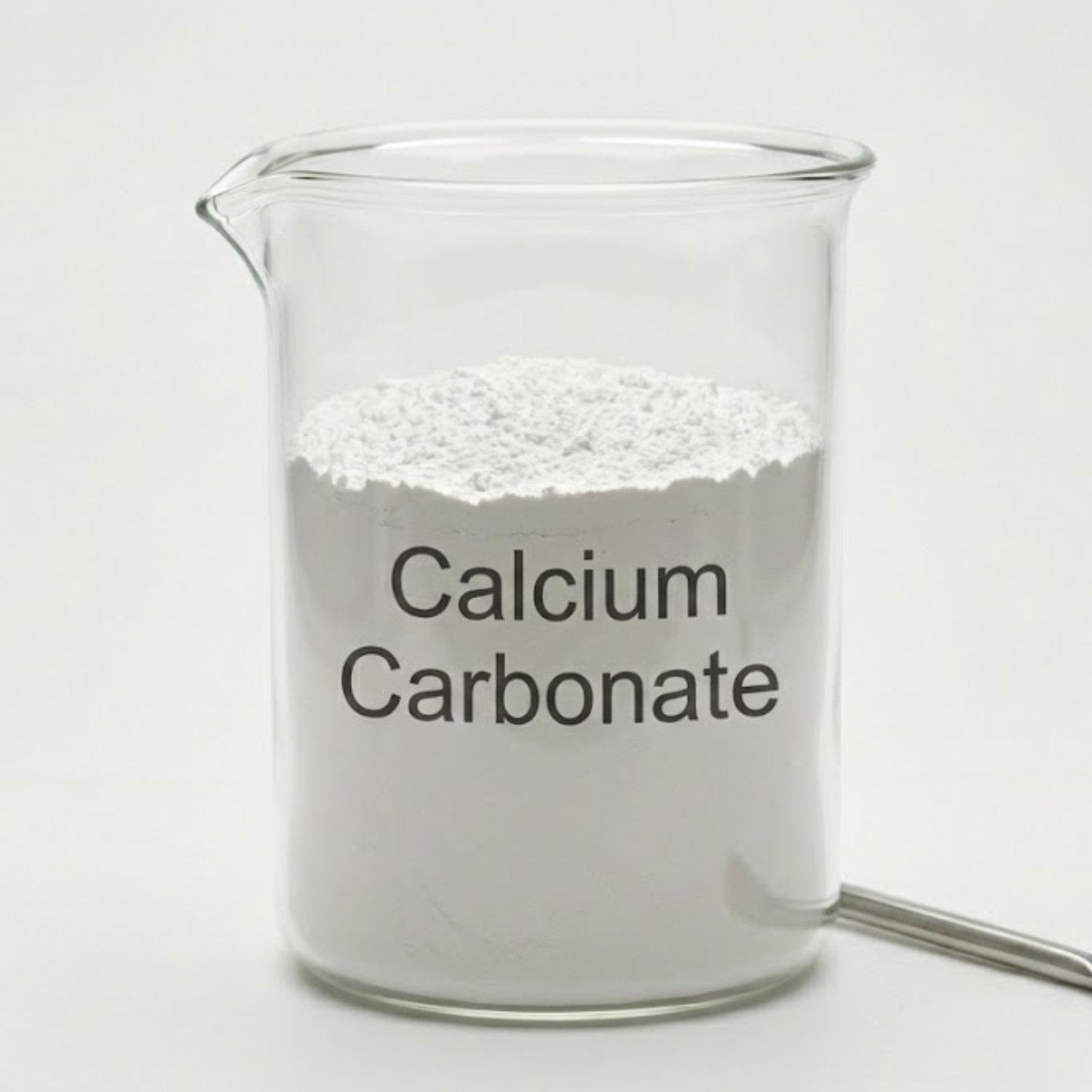
Calcium Carbonate
Inorganic Chemical Compound
Calcium carbonate is an inorganic chemical compound with the formula CaCO₃. It appears as a white, odorless powder or crystalline solid and occurs naturally in minerals such as limestone, marble, and chalk. It is practically insoluble in water but reacts with acids.
It is commercially produced from natural limestone or by precipitation processes. Calcium carbonate is widely used in construction, paper, plastics, paints, pharmaceuticals, food processing, and water treatment.
Physical & Chemical Properties
CaCO₃
≥ 98%
White powder
-
Calcium Carbonate
Product Specifications| Specifications | Range |
|---|---|
| Appearance | White Hygroscopic Lumps |
| Assay (CaCl₂) | Min. 95% |
| Iron (Fe) | Max. 0.002% |
| Heavy Metals (as Pb) | Max. 0.002% |
| Sulphate (SO₄) | Max. 0.05% |
| Loss on Drying | Max. 10% |
Calcium Carbonate
Calcium Carbonate Applications
Calcium carbonate is extensively used in the construction industry as a raw material in cement, concrete, lime, and building products. It improves strength, durability, and workability in construction applications.
Calcium carbonate is used in the pharmaceutical industry as a calcium supplement and antacid. It is commonly used in tablet formulations and dietary supplements.
In the paper industry, calcium carbonate is used as a filler and coating pigment. It enhances paper brightness, smoothness, opacity, and printability while reducing overall production costs.
In agriculture, calcium carbonate is used to neutralize acidic soils and improve soil structure. It enhances nutrient availability and supports healthy crop growth.
Calcium carbonate is widely used as a filler in plastic manufacturing. It improves rigidity, impact resistance, and surface finish while lowering material costs in plastic products.
Food-grade calcium carbonate is used as a calcium fortifier, acidity regulator, and anti-caking agent in food and beverage products, supporting nutritional and processing requirements.
In paints and coatings, calcium carbonate acts as an extender pigment. It enhances opacity, viscosity control, durability, and improves the overall performance of coating formulations.
In the rubber industry, calcium carbonate is used as a filler to improve processing, reduce cost, and enhance mechanical properties of rubber products.